A patient expecting to wait weeks for a dental crown is surprised when the procedure is finished in a single afternoon. For Victor Feitosa, moments like this show how digital dentistry is reshaping care—and why he is excited to be teaching at the University of Iowa College of Dentistry and Dental Clinics.
Feitosa, originally from Fortaleza, Brazil, joined the Department of Operative Dentistry as a clinical assistant professor nearly two years ago. He came to Iowa after serving as a faculty member in Brazil, drawn by the college’s international reputation for strong clinical training and cutting-edge technology.
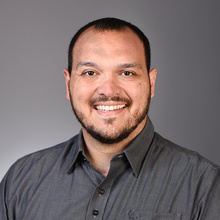
“Iowa is very traditional and well known around the world,” he says, “The research is excellent, but what impressed me most is how everyone here strives to give the best patient care and the best teaching. That combination is unique.”
In Brazil, Feitosa’s work focused heavily on research. At Iowa, he balances research with his passion for mentoring students and engaging in clinical practice. His specialty, operative dentistry, provides immediate results for patients—restorations that repair fractured or decayed teeth in a single visit. “It’s straightforward and therapeutic,” he explains. “You can see the outcome right away, and patients really feel the difference.”
Much of his teaching centers on digital dentistry, which the college integrates from the very beginning of dental education. First-year students learn how to scan, progressing year by year toward designing and fabricating restorations. By their junior year, they are completing entire cases in the clinic.
“Instead of having one separate digital course, students build skills step by step,” Feitosa says. “That way, they are ready to apply what they’ve learned with patients.”
He has seen how this approach builds both competence and confidence. In one instance, a student explained to a patient that the procedure would be completed immediately using digital technology. “The patient was surprised—in the best way,” Feitosa recalls. “It was rewarding to see the student not only manage the software and treatment but also communicate so effectively with the patient.”
Digital systems also simplify communication with dental labs. Files, forms, and photos can be shared instantly, eliminating the risk of misplaced paperwork and reducing delays. Students practice both analog and digital approaches, ensuring they graduate prepared for a wide range of clinical settings.
For Feitosa, the joy lies in watching that progression.
“It’s really rewarding to see the evolution of students,” he says, “They gain technical skills, but they also learn how to talk to patients, explain procedures, and build trust.”
That patient connection, he adds, is what makes dentistry distinctive. Unlike medical care that may last only a few months, dental relationships can span years.
“It’s building relationships with the patient – that’s what makes dentistry special,” Feitosa says.
In Iowa City, Feitosa has found the right setting to combine innovation, clinical excellence, and education.
“We are preparing students not only for today’s dentistry but for the future,” he says. “And that’s something very powerful to be part of.”