
For many patients, a small cavity can feel deceptively minor—easy to fix, easy to forget. But left unchecked, that early damage can quietly deepen, leading to larger restorations, higher costs, and the loss of healthy tooth structure. In dentistry, how soon and how thoughtfully clinicians intervene can make all the difference.
That moment—when a cavity is just beginning to progress—is where Cristina Vidal, DDS, MS, PhD, departmental executive officer and associate professor in the Department of Operative Dentistry at the University of Iowa College of Dentistry and Dental Clinics, focuses her work.
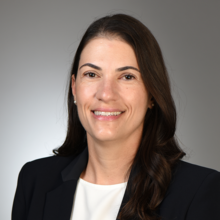
“Dental caries are still the most prevalent disease in the world,” Vidal says.
Vidal noted its disproportionate impact on children and older adults. Traditionally, treatment has focused on repairing damage after it occurs—removing diseased tooth structure and replacing it with restorative materials. While effective, those approaches don’t always address why cavities progress or how to slow them once they begin.
Vidal’s research literally looks deeper. Rather than focusing only on bacteria or patient behavior, her work examines how the tooth itself contributes to disease progression. By understanding how dental tissues break down from within, her research aims to identify new ways to stop cavities earlier and preserve more of the natural tooth.
“We’re trying to understand how cavities expand from the inside,” she explains. “If we can characterize those mechanisms, we can propose therapies and materials that stop progression and promote repair.”

Her research-focused mindset—conservative, preventive, and patient-friendly—directly informs how care is delivered in the college’s clinics. Instead of defaulting to more aggressive restorations, clinicians can explore strategies that slow disease, protect the pulp, and maintain tooth structure whenever possible.
The connection between research and care is not abstract at Iowa, it is visible daily in the clinic. Vidal works alongside students both in research projects and in patient care settings, helping them see how scientific discovery translates into clinical decision-making.
“Students are involved in research from their first year,” she says. “They see how questions that come from the clinic can turn into studies and how that knowledge comes back to benefit patients.”
That exposure shapes how future dentists think about treatment. Students learn that dentistry is not only about fixing what’s broken, but about understanding disease, preventing progression, and choosing approaches that align with each patient’s needs and goals.
For patients, the benefits are tangible: fewer invasive procedures, more personalized care, and treatments informed by the latest evidence. For students, the lesson is lasting that research is not separate from clinical practice, but essential to improving it.
“At the end of the day, our goal is to give patients more options,” Vidal says. “Options that are conservative, effective, and grounded in science.”