Editor's Note: This story first appeared in the spring 2026 Dental Link magazine.
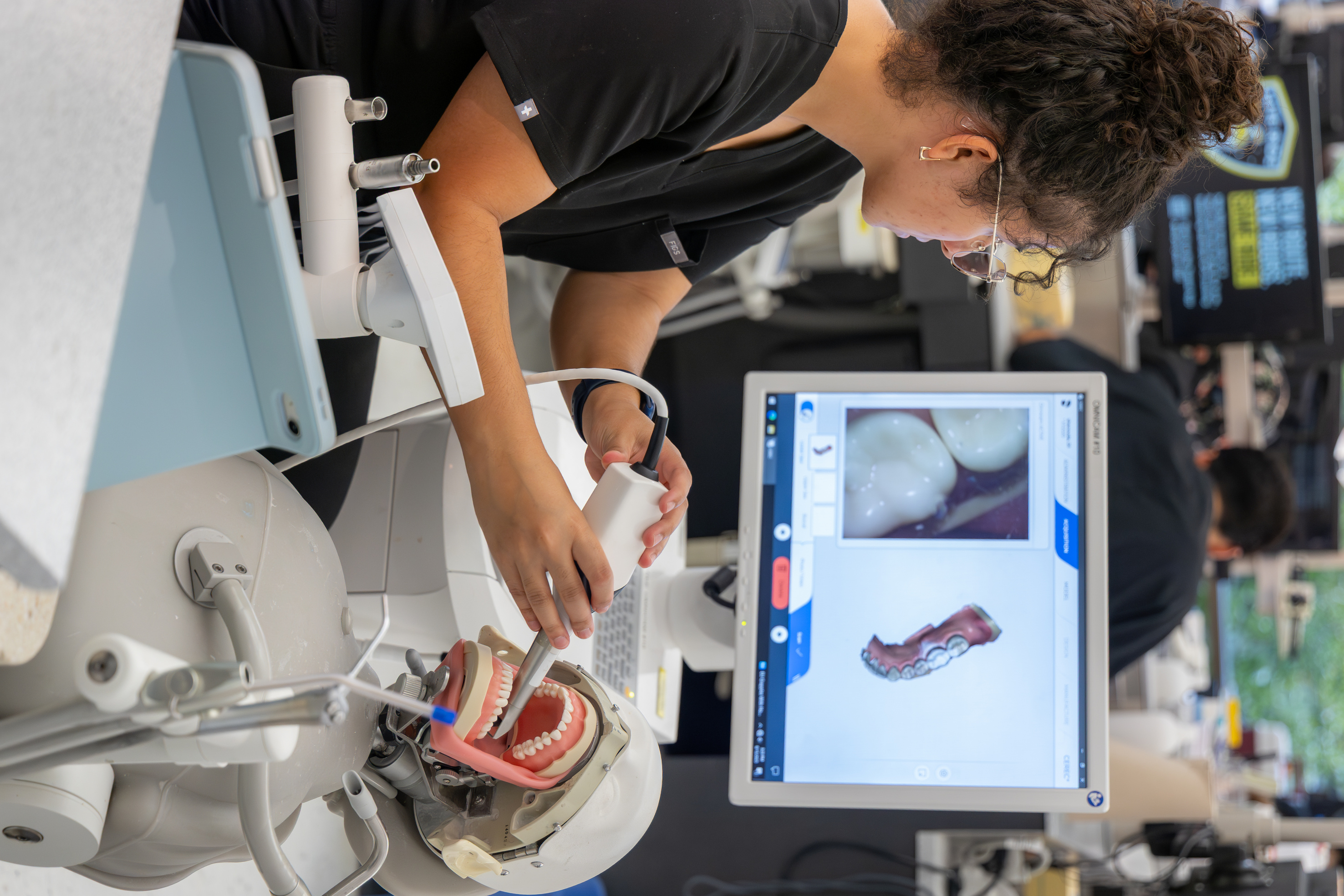
Inside a modern simulation lab at the University of Iowa College of Dentistry and Dental Clinics, students lean toward screens, scanners, and lifelike training models as they practice the fine movements that one day will guide patient care.
The tools are advanced and the environment is technical, but the purpose is familiar: helping Iowa students learn by doing.
That commitment has guided dental education at Iowa for generations. From the college's earliest classrooms to today's digital training spaces, innovation did not occur overnight. It has been built over decades through new technologies, evolving patient care and expectations, and a steady focus on discovery research.
Building the foundation
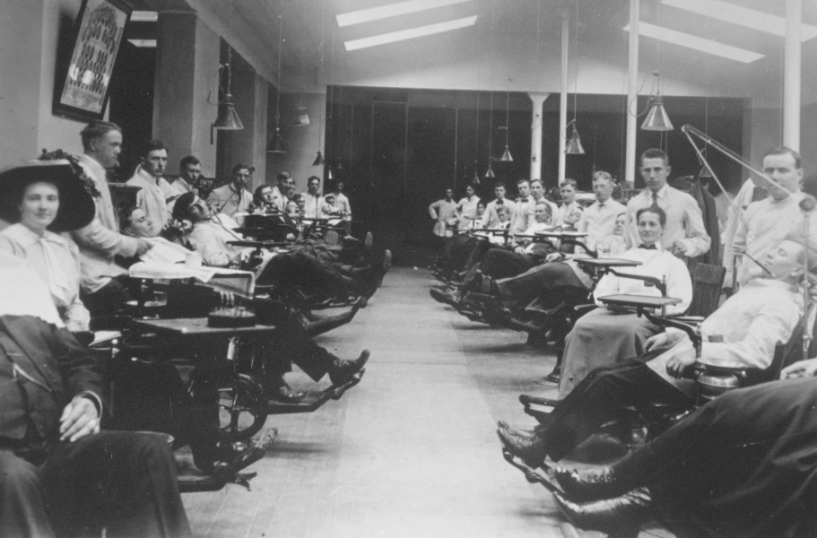
Long before digital scanning and 3D imaging became part of dental education, students at Iowa learned in spaces designed to prepare them for the future of care. Historic images from the college show rows of students gathered in early classrooms, working alongside faculty and learning the fundamentals of a profession that would rapidly change through new techniques, and approaches to care.
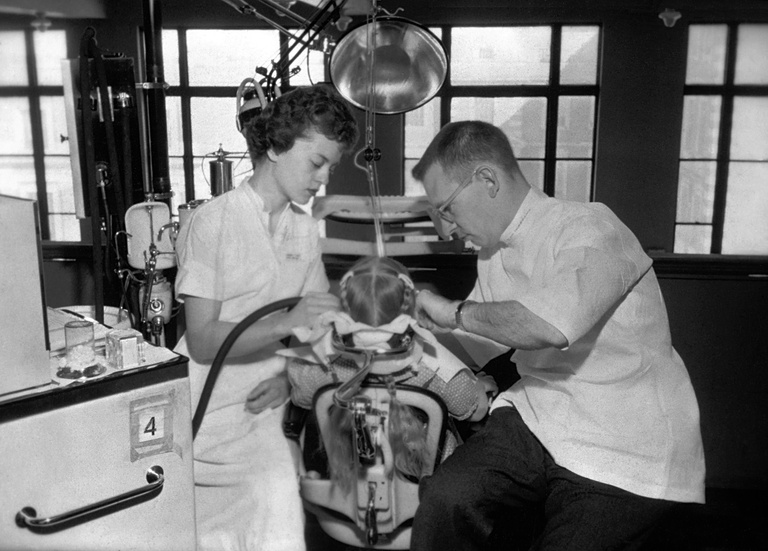
In Trowbridge Hall, the college's home from 1917 to 1972, early clinical care reflected both the promise and the pace of that transformation. Faculty taught students not only how to treat patients, but how to adapt as dentistry advanced.
Professor emeritus Philip Lainson is shown instructing dental students inside Trowbridge Hall—a reminder that Iowa's progress has always depended on faculty who guided students through change while keeping patient care at the center of the work.
Transforming dental education
By the late 20th century, the pace of innovation was accelerating.
The construction of the Simulation Lab in the late 1990s signified that changing winds at Iowa, creating a technology-rich environment where students could strengthen their skills before entering clinical settings. The lab laid the groundwork for the advanced, hands-on education students experience today.
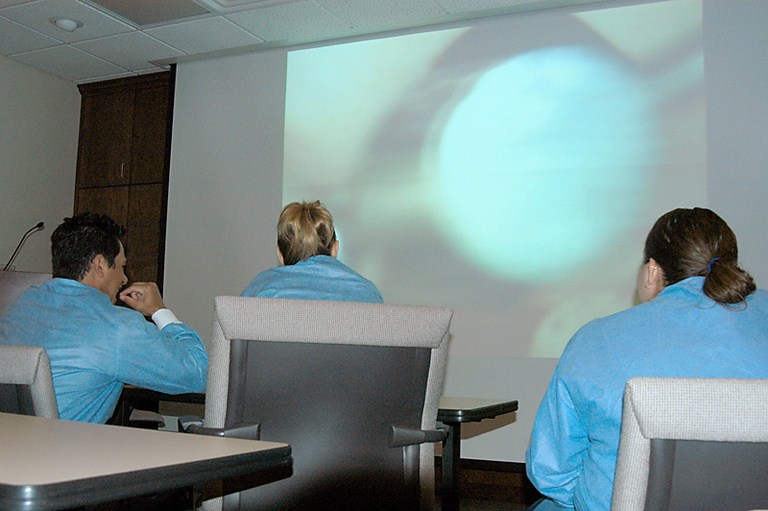
Technology also changed how students learned, collaborated, and saw the work in front of them. Overhead projectors gave way to high-resolution videos and digital imagery, allowing faculty to demonstrate procedures with greater clarity and helping students study techniques in more precise details.
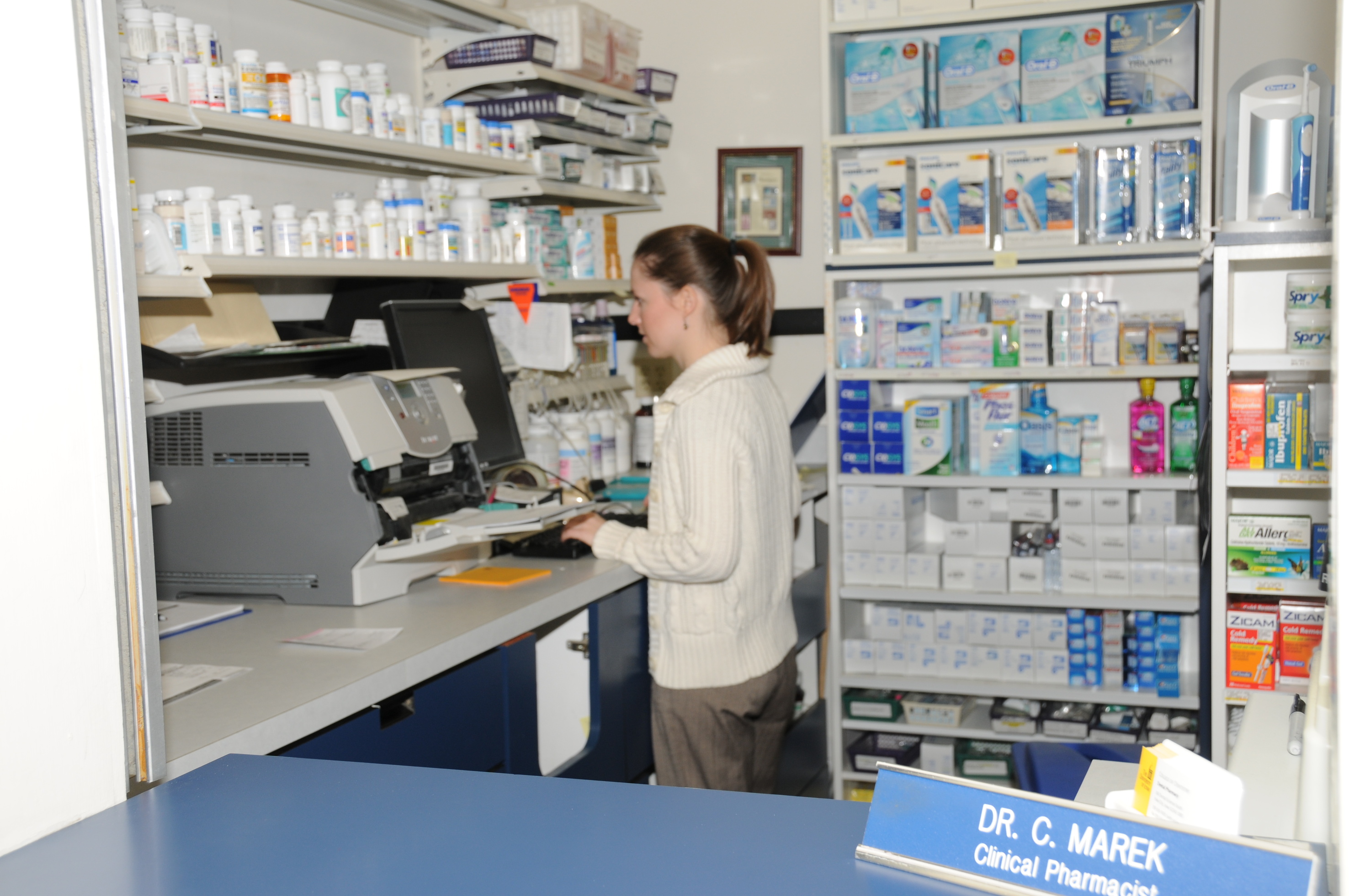
Inside the Dental Science Building, the Dental Pharmacy became embedded within the dental school. The only embedded pharmacy in a dental school at the time of its creation. That model allows dental students to collaborate directly with pharmacists on prescribing, drug interactions, and patient counseling.
Training for today and beyond
Today, Iowa students train in advanced simulation environments that mirror real-world practices.
They use digital tools, precision techniques, and hands-on experiences from day one. Digital scanning and 3D imaging now allow for more precise, efficient diagnosis and treatment, changing not only how students learn, but how care is delivered.

The technology may look different from one generation to the next, but the throughline remains the same: Iowa continues to adequately prepare students for providing excellent patient-centered care.
Innovation at Iowa is a story of people—faculty, students, clinicians, pharmacists, researchers, and patients—working together to improve care.