Van der Woude syndrome (VWS) is the most common form of syndromic orofacial clefting, yet patients with the same genetic mutation can experience dramatically different clinical outcomes. Some may have subtle lip pits, while others face severe bilateral clefting, feeding difficulties, and speech challenges. This variability, present even among identical twins, complicates diagnosis, treatment planning, and long-term care.
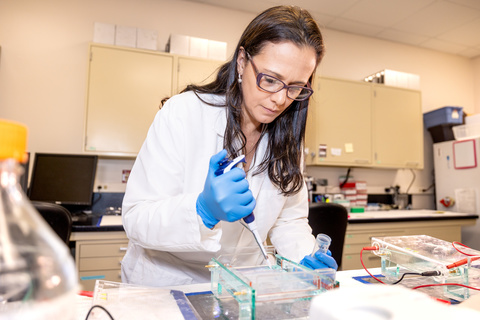
Aline Petrin, assistant professor in the Department of Orthodontics, has received a Clinical/Dental Education Research Initiative Support Program (CRISP) grant to investigate the genetic causes of this variability. Petrin and her team will complete genetic screening for 85 individuals in a larger cohort of 288 patients with VWS. This work will help identify mutations in three known VWS-related genes: IRF6, GRHL3, and PRKCI, while providing the missing genetic context needed to support ongoing epigenetic studies.
Petrin’s research has already shown that differential DNA methylation plays a role in how VWS presents in patients, including identical twins. By completing the genetic characterization of the cohort, the team will be able to explore how specific mutations influence methylation patterns and, ultimately, clinical outcomes.
The study is supported by the University of Iowa College of Dentistry’s CRISP program, which provides funding for faculty pursuing clinical or dental education research questions. Amanda Seaberg, orthodontics resident, is a co-investigator on the project and will assist with data collection and analysis.