Over the past two decades, restorative dentistry has seen a shift toward all-ceramic materials for full coverage indirect restorations. These materials offer improved esthetics, strength, and compatibility with digital workflows, yet little is known about how widely they have been adopted in academic settings.
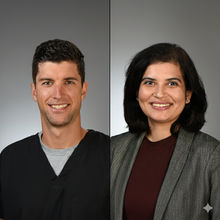
Robert Bowers and Anvita Maharishi, assistant professors in the Department of Family Dentistry, have received a Clinical/Dental Education Research Initiative Support Program (CRISP) grant to investigate national practice trends in the use of materials for indirect restorations. Their study will analyze 15 years of data on dental procedures from 18 dental schools participating in the BigMouth Dental Data Repository to determine how often all-ceramic materials are used compared to gold and porcelain-fused-to-metal restorations. Their preliminary data looked at similar information at the University of Iowa College of Dentistry.
The research team will examine usage patterns by tooth location, provider type, and institution, with the goal of identifying whether most restorations now rely on all-ceramic materials. These findings could help inform updates to dental school curricula and licensure exam standards, ensuring that students are trained in techniques that reflect current clinical practice.
The study is supported by the University of Iowa College of Dentistry’s CRISP program, which provides funding for faculty pursuing clinical or dental education research questions. Daniel Caplan, professor in the Department of Preventive and Community Dentistry, is a co-investigator on the project and will lead the statistical analysis.