Core Research Areas
The University of Iowa is a world-wide leader in Orthodontics research.
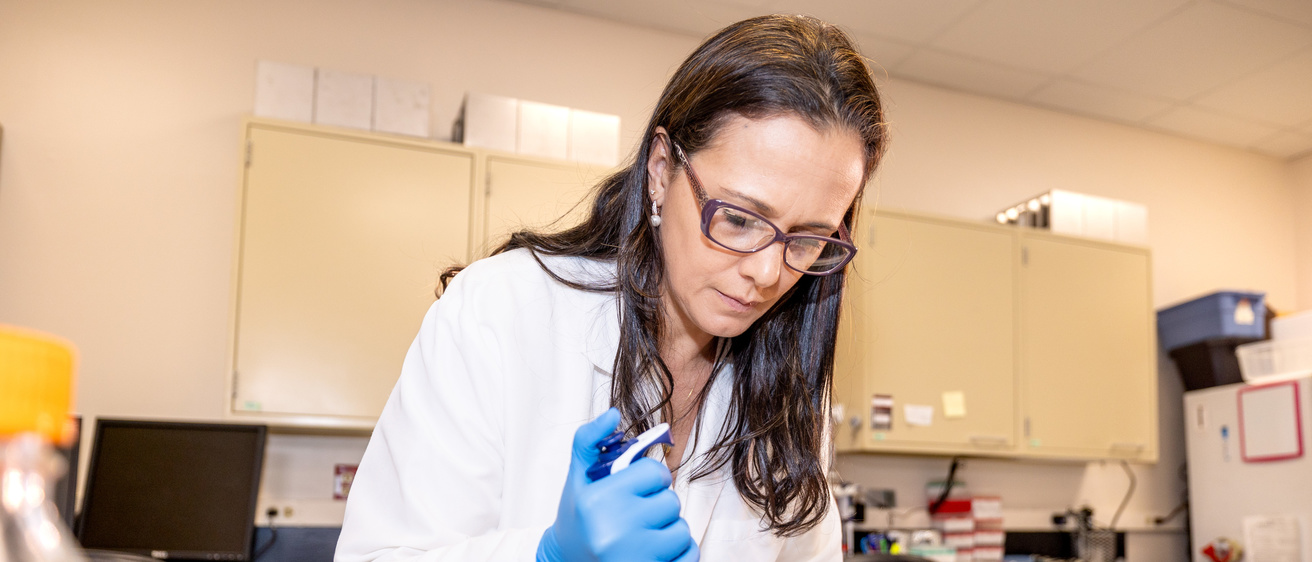
This innovative research is driven by our distinguished faculty who are recognized as leaders in their respective fields. Our faculty continuously advances orthodontic science year after year through groundbreaking research across a variety of focus areas. Residents in the University of Iowa Specialty Program will be able to work alongside our faculty members, offering unique and enriching research experiences in areas like pre-clinical/clinical biomechanics in orthodontics, surgical orthodontics, cleft lip and palate treatment, speech pathology, animal study, genomics/epigenomics, human growth study, and artificial intelligence.
A key component of the Specialty Program is the thesis project, which is designed to get students involved in research they are passionate about. Residents are given opportunities throughout their time at Iowa to advance their research. This includes access to research funding thanks to our alumni support, along with several other grants and awards. Many of the department’s thesis projects lead to publications in esteemed peer-reviewed journals, including the American Journal of Orthodontics and Dentofacial Orthopedics, The Angle Orthodontist, Progress in Orthodontics, and Seminars in Orthodontics. This reflects the high-quality and impact of the research conducted by our residents and staff.
Below are some of the highlights from the research being performed in our department:
Resident Thesis Projects

Sydney Sanchez
2nd Year Resident - Mentored by Dr. Steven Marshall
“My thesis project is focused on adjusting the current onboarding curriculum that first-year orthodontic residents participate in. This pilot study started with interviewing 3 different cohorts of residents to gain insight into the strengths and weaknesses of the University of Iowa's onboarding process. Based on this feedback, asynchronous videos were created to supplement areas that past residents thought could be improved. This year’s incoming residents will watch the asynchronous content and provide feedback for future directions of this project. This research is important because residency is only a two-year process where a residents build the foundation for their careers. By streamlining and improving the initial few weeks/months of residency, residents can feel more confident and comfortable moving forward and obtaining more knowledge throughout the remainder of their residency. The University of Iowa has supported my research through incredible mentorship throughout the department - whether it be supplies needed or bouncing off ideas, any of the faculty members are open to discussing resident research. My advice to incoming residents is to find a project that piques your interest! The faculty are open to new ideas and are highly supportive of student research. A lot of time and energy gets invested into a thesis project, so find a mentor and project that resonate with you!”

Amanda Seaberg
2nd Year Resident - Mentored by Dr. Aline Petrin
"My research is on the role of DNA methylation in the phenotypic variability of individuals with Van der Woude Syndrome. This is a project that I started when I was in dental school at Iowa and have expanded it for my master’s thesis. I work with Dr. Petrin on this, and we are currently the only ones doing research on epigenetics in Van der Woude Syndrome (VWS). I have always been interested in studying cleft lip and palate, which many people with VWS have, so that is how I got started on this project. The funding that Dr. Petrin’s laboratory has received from various grants and the University of Iowa helps to support my research. Incoming residents should try to pursue something that they’re interested in, but be open to new ideas because there are a lot of great projects that the department is working on."

Lyda Sypawka
2nd Year Resident - Mentored by Dr. Kyungsup Shin and Dr. Steven Marshall
“I am doing clinical research on the measured forces exerted by orthodontic expanders (RMEs) during treatment. This topic is one that has been passed down from previous residents. It is a study that has been developed by 5 residents over the past 4 years. This research will give us a better method of the quantification of the forces of expanders, as well as an understanding of the viability of the most common expander treatment procedures. The university is providing compensation for patients undergoing the research study, as they must come in for regular appointments over consecutive days during their treatment. I would tell them [future residents] to take the time to learn and use the resources you have available for you as a resident at the university.”
Why Choose Us
Discover what sets the University of Iowa’s Specialty Program apart as a leader in orthodontic education.
Updates

Diving Deeper Into Dr. Petrin's NIH Grant
University of Iowa Researcher Receives NIH Grant to Investigate Epigenetic Mechanisms Behind Orofacial Clefts

Unlocking the Secrets of Oral Tissue Regeneration: The Role of IRX1 in Wound Healing

Awotoye receives Harry Sicher Research Award
University of Iowa Students Excel at 2025 AADOCR Hatton Competition

Awotoye named TORCH recipient
College of Dentistry Research
The College of Dentistry offers many opportunities for students to pursue research outside orthodontics.